
Origins and education
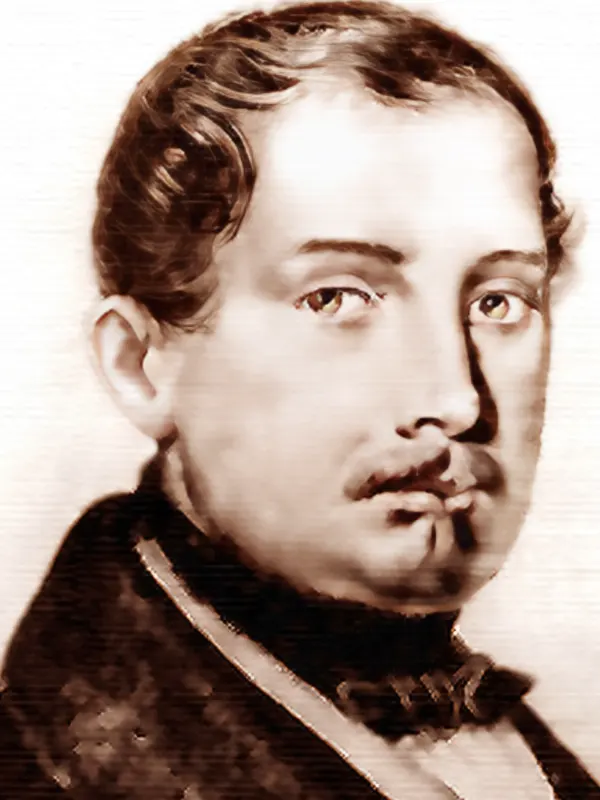
Salvadore Cammarano was born in Naples on March 19, 1801. Raised in an environment deeply connected to the theatre, he developed a strong interest in dramatic writing and melodrama from a young age, which was destined to become the center of his artistic activity.
Initially, he dedicated himself to comedy and prose theatrical production. In 1834, he definitively abandoned this activity to focus on writing opera librettos, a field in which he rapidly established himself as one of the leading musical playwrights of Romantic Italy.
A playwright for romantic melodrama
Cammarano was a man of the theatre with vast experience, endowed with a strong dramatic sense and a remarkable ability to adapt the structure of the text to musical requirements. His librettos show particular attention to stage construction and narrative rhythm, fundamental elements for romantic melodrama.
His style is distinguished by refined musicality and great expressive variety. In his verses, elegiac and melancholic tones in the cantabiles coexist with energetic surges in the cabalettas, solemnity in the choral scenes, and incisive dialogues of tragic descent. Together, they produce a dramaturgy rich in emotional contrasts, consistent with the intense and often somber atmospheres typical of 19th-century musical theatre.
Collaboration with Donizetti
Cammarano's fame is closely linked to his collaboration with Gaetano Donizetti. With the libretto for Lucia di Lammermoor, one of the most famous works of the Italian romantic repertoire was born, establishing a new form of "dramma per musica" characterized by dark atmospheres, violent situations, and tormented psychologies.
The libretto introduced a tight narrative tension and strongly evocative dramatic suggestions, with nocturnal and unsettling settings that helped define the theatrical language of Italian romantic melodrama.
Dramatic structure and poetic style
Cammarano wrote nearly forty librettos, collaborating with some of the most important Italian composers of his time. Twenty-two of them possess a particular characteristic: the acts are given a specific title that immediately indicates the central event, character, or location of the scene.
His poetic language, while not seeking easy popularity, shows a great awareness of metrical forms and the dramaturgical needs of musical theatre. His texts are rich in literary references and testify to a vast culture, which is reflected in the complex and refined construction of the librettos.
The final masterpiece: Il trovatore
Cammarano died in Naples on July 17, 1852, shortly after completing the libretto for Il trovatore for Giuseppe Verdi. The opera would become one of the absolute masterpieces of 19th-century melodrama.
For a long time, it was believed that the libretto had remained unfinished. In fact, the text was substantially finished and was only supplemented with additions by Leone Emanuele Bardare at Verdi's request. Among these are Count di Luna’s cantabile «Il balen del suo sorriso» and Leonora’s «D’amor sull’ali rosee». The composer himself also intervened with some cuts in the final scene.
Through his work, Cammarano contributed decisively to the definition of the Italian romantic musical drama, leaving a lasting imprint on the history of melodrama.
The King Lear project
Salvadore Cammarano's premature death interrupted a collaboration that could have had further developments of great significance. A new operatic project based on William Shakespeare's King Lear was planned with Giuseppe Verdi. Cammarano had already outlined the structure of the libretto, but his passing prevented the completion of the work.
The text was later reworked by librettist Antonio Somma; however, Verdi never set it to music. The opera thus remained one of the most famous unfinished projects in the history of Verdian melodrama.
A vast production
During his career, Cammarano wrote nearly forty librettos, collaborating with many of the leading Italian composers of the 19th century. Among the most important were Gaetano Donizetti, Saverio Mercadante, Giovanni Pacini, Giuseppe Verdi, Alessandro Nini, Federico Ricci, and Giuseppe Persiani.
The collaboration with Donizetti was particularly intense and produced fundamental works of the romantic repertoire such as Lucia di Lammermoor (1835), Belisario (1836), Pia de’ Tolomei (1837), Roberto Devereux (1837), Maria de Rudenz (1838), and Maria di Rohan (1843).
Collaborations with Verdi and Mercadante
Cammarano also worked with Giuseppe Verdi, for whom he wrote the librettos for Alzira (1845), La battaglia di Legnano (1849), Luisa Miller (1849), and Il trovatore (1853). The latter, completed shortly before his death, is considered one of the pinnacles of romantic melodrama.
Also important was his collaboration with Saverio Mercadante, for whom he wrote librettos such as Il proscritto (1842), Orazi e Curiazi (1846), Virginia (1850, performed in 1866), and the remake of Medea.
Adaptations and interventions on existing librettos
In addition to his original librettos, Cammarano also intervened on pre-existing works. He wrote four new scenes for Andrea Leone Tottola’s La donna del lago for the music of Gioachino Rossini (1834) and a new scene for Felice Romani’s Anna Bolena set to music by Donizetti in the same year.
In 1845, he also created a new third act for Romani's Francesca Donato with music by Mercadante. These interventions demonstrate how much he was valued by the composers of the time for his theatrical competence and his ability to adapt texts to musical needs.
A protagonist of romantic musical theatre
Thanks to the vastness of his production and the quality of his dramaturgy, Salvadore Cammarano was one of the leading librettists of 19th-century Italian melodrama. His work contributed decisively to the definition of the romantic musical drama, characterized by narrative tension, emotional intensity, and strong integration between word and music.
His collaborations with Donizetti, Mercadante, and Verdi testify to the central role he played in the transformation of Italian musical theatre in the first half of the century.


Pubblico dominio (Commons)
