Origins and education
Giovanni Bertati was born on July 10, 1735, in Martellago, near Venice. Initially directed toward ecclesiastical studies at the episcopal seminary of Treviso, he was protected by the nobleman Antonio Grimani, for whom his father worked. Despite this religious upbringing, Bertati soon decided to abandon his clerical career to devote himself to literature and musical theatre.
His debut as a librettist took place in 1763 with La morte di Dimone, set to music by Antonio Tozzi. The work marked the beginning of a long theatrical career that would lead him to collaborate with numerous composers and become a prominent figure in the landscape of Classical-era melodrama.
Venetian theatres and Vienna
In 1765, his libretto for L’isola della fortuna, set to music by Andrea Luchesi, was performed in Vienna. For many years, Bertati remained active in Venetian theatres, where he worked until 1791, contributing to the production of numerous drammi giocosi and opere buffe.
In 1770, he traveled to Vienna several times to collaborate with the composer Baldassare Galuppi. His prestige grew steadily until Emperor Leopold II appointed him Poeta Cesareo (Imperial Poet) of the Italian Opera in Vienna, a position in which he succeeded Lorenzo Da Ponte, who had fallen out of favor the previous year. Bertati held this post until 1794, when he was replaced by Giovanni De Gamerra.
The return to Venice
After the end of his Viennese experience, Bertati returned to Venice, where he spent the final years of his life. While waiting for his pension, he obtained a position as an archivist at the city's Arsenal. He died in Venice on March 1, 1808, in conditions of solitude and almost forgotten by the theatrical world to which he had dedicated his entire career.
Comic theatre and drammi giocosi
Throughout his career, Bertati focused primarily on writing drammi giocosi, drawing inspiration from the models of Carlo Goldoni and Pietro Chiari. While he did not always reach the refinement of his predecessors, he nonetheless contributed to the development of the opera buffa repertoire in the late 18th century.
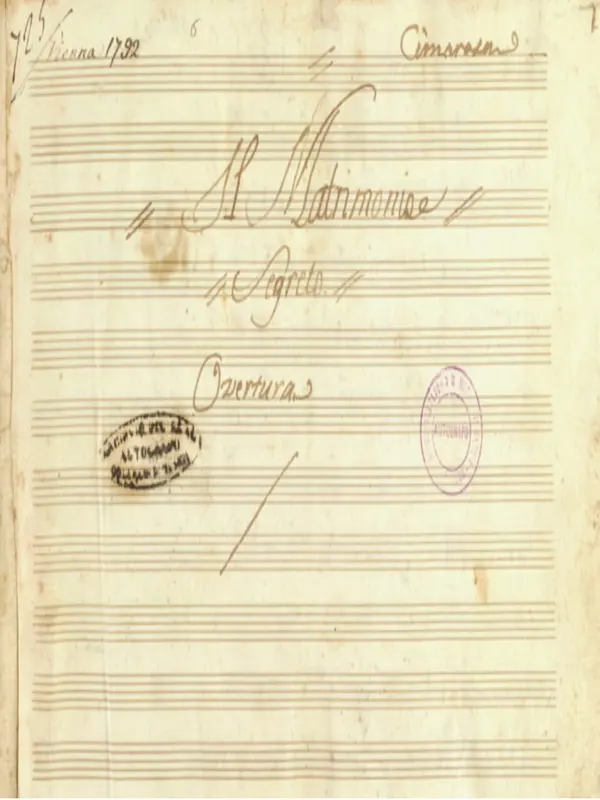
His most famous libretto is Il matrimonio segreto (The Secret Marriage), set to music by Domenico Cimarosa and first performed on February 7, 1792, in Vienna. The opera became one of the greatest successes of European musical theatre of the time.
The Venetian Don Giovanni
Another significant work by Bertati was the libretto Don Giovanni o sia Il convitato di pietra, set to music by Giuseppe Gazzaniga and performed on February 5, 1787, at the Teatro Giustiniani di San Moisè in Venice. This work predated by a few months Mozart's more famous Don Giovanni based on a libretto by Lorenzo Da Ponte.
According to some scholars, Bertati's libretto may have provided the initial inspiration for Mozart's Il dissoluto punito ossia il Don Giovanni, destined to become one of the absolute masterpieces of European musical theatre.
A vast production
Bertati's output was extremely extensive. Approximately seventy librettos are known, many of which were set to music multiple times by different composers. Among the most significant titles are Il villano geloso, Mirandolina, L’anello incantato, La locanda, I visionari, La contessa di Novaluna, and La bella selvaggia.
This intense activity testifies to Bertati's role as one of the most industrious librettists of late 18th-century Italian musical theatre, capable of fueling operatic production during a period of great vitality for European melodrama.


Pubblico dominio (Commons)
